Showing posts with label bat rehabilitation. Show all posts

Sunday, March 28, 2010

Ring of Fire

Love is a burning thing
And it makes a fiery ring
Bound by wild desire
I fell into a ring of fire

I fell into a burning ring of fire
I went down, down, down and the flames went higher
And it burns, burns, burns, the ring of fire
The ring of fire

The taste of love is sweet
When hearts like ours meet
I fell for you like a child
Oh, but the fire went wild

I fell into a burning ring of fire
I went down, down, down and the flames went higher
And it burns, burns, burns, the ring of fire
The ring of fire

"Ring of Fire" by June Carter and Merle Kilgore
Recorded by Johnny Cash March 25, 1963--47 years ago almost to the day!
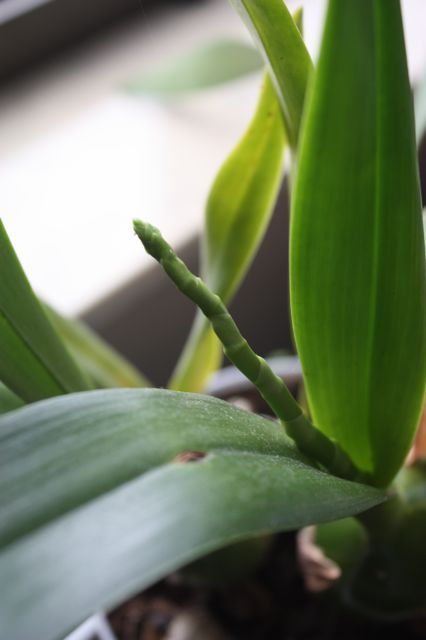
For the past few weeks I feel as if I've been neck deep in a big black cauldron, a slow woodfire getting hotter beneath me (I have a vivid and politically incorrect Looney Toons image in mind of the little grass-skirted cannibals with bones in their hair dancing around me). As you may know, I generally write my blog essays well ahead of actually posting them. It's mostly a temperamental thing, a perfectionist's way of making sure that what gets posted is close to what I really wanted to say. But I also post ahead because life is strange and it takes lots of twists and turns, and I don't want to write about an event before I know how it turns out.

Encyclia cordigera bloom spike, taken March 11, 2010. It's three times that long now.

I have a draft post waiting on an orchid that I started writing in January, when its bloom spike first appeared, and now the spike is over a foot long and the buds are still weeks from opening, and you just never know. Maybe all the buds will drop off tomorrow or I'll close the brittle spike in the Venetian blind, as I narrowly avoided doing this morning, and I won't have a story after all, or I'll spin it into an even better story about how you can hope and wait and care for something for a long time and be rewarded only with disappointment. That's writing. E.L. Doctorow said, "Writing is like driving at night in the fog. You can only see as far as your headlights, but you can make the whole trip that way."


And that's life. Living is like driving at night in the fog.

Perfectionists don't like to admit they're not perfect. Leo perfectionists really hate admitting it. Worse than admitting it is plainly demonstrating it. I've done all that and more lately. I've had to surrender control and let my own ignorance wash over me like a big wave, and I've posted about every stage of that process here, for everyone to see. I got caught up with these little bats (yes, there are two now, and I haven't even gotten to THAT part of the story) and I fell in love and we all know that love is blind. Love is blind and dumb, excitable and heedless and love, in its giddy, wonderful way, can trample all over life.

In my own lame defense, bats are a special case. Bats are magic animals--smart, funny, weird and insanely lovable once you get over the eeps. It took me about four hours to get over my trepidation and walk right into the ring of fire. And I was there, cooking away, and I didn't even know it. And that's where the special case part kicks in, because bats, alone among any animal with which a Science Chimp could fall in love, can kill you without your knowing it.

Oh, I could probably love a copperhead or a lionfish, but I'd know how to keep it from killing me. You stay away from the fangs and the spines and you're good. But bats...bats. A bat can kill you without meaning to, because bats can have and transmit rabies without showing that they're ill. You stay away from the teeth and claws, OK, I've been successful at doing that, but can you stay away from the saliva when you've got a bat you're giving water to spluttering and cussing in your glove? Can you say for sure that a microdroplet hasn't landed on your lip or in your eye? Well, no, you can't. And can you say for sure that that bat isn't shedding rabies virus without cutting off its head? No, you can't. I didn't know that, and volumes of other things about bats and rabies, when I took them in. And now, thanks to the information provided by concerned readers and my own rooting around, I know more, enough to be deeply uncertain and troubled.

I know in my core that these bats are healthy. At least, they're healthy right now, and they've been healthy for the ten and six weeks, respectively, that I've kept them. They're gobbling down their food and preening and cuddling with each other. That's good, and every week that they're under observation helps. But we simply don't know enough about latent rabies in bats, about the incubation period of bat strain rabies in bats (which is highly variable, and can be weeks to months...or can it be years?), OR about just when and how they shed the virus, to say for certain, even though nobody in my house has been bitten or scratched, that we're safe.

All the studies about incubation period of rabies in bats has been on bats infected in a lab situation with the canine strain of rabies. And in those studies, the bats trace a typical mammalian arc, falling ill within a few weeks, and dying about a week later. But we don't know about the incubation period of the bat strain of rabies (and there are several), and it only makes sense that the particular genius behind viral evolutionary design might engineer a bug that can lie latent and infect other animals while keeping its host going strong for as long as possible. Whoever He is, there's ample evidence that the Virus God is not a benevolent one.

Speaking of benevolence, your generosity has been overwhelming, and the hot stew I've been sitting in has been seasoned with tears as the electronic transfers and now the mailed checks arrive. I'm deeply moved by your commitment to this weird and, I hope, unnecessary cause, by your willingness to send money to try to build rabies immunity in my blood, an imperfect hedge against a dreadful disease. Before this story fully unfolded, my animal-loving Liam helped me feed the bat off the end of a long tweezers, and because his dear little face was at the splutter level, he and I are going in together on Wednesday for our first shots. You've donated enough to cover me, and I'm going to cover him. If you wish to help, know that I am not yet cried out of grateful tears. Almost, but not quite. See the little bat button in the right sidebar if you wish to donate to the Zick Health Fund. Two courses of the vaccine will cost $1,230.00, six shots at $205/shot.

What looks like Liam's hand in this photo is actually a beige washcloth. No touching!

Tomorrow, I will load the bats in their deluxe tank, and a lovely adult male sharp-shinned hawk with a broken wing, into the back of my car and spend the day driving them all to Columbus, to the Ohio Wildlife Center, the only facility that will receive them and, in the case of the hawk, repair it. Bill of the Birds helped me see that the broken sharp-shin was a messenger for change, to tell me it was time to surrender the bats. The bat caretakers at OWC have already been vaccinated, and it only makes sense to lessen our risk by giving the animals over to them. I will miss the bats terribly; I look forward to our every contact. I'm choosing to look at the next month as their stay in a spa that has an exercise room. If all goes well with flight conditioning (which will start in mid-April), I may have the chance, come mid-May, to don my gloves yet again and hang the little couple high on a tree right near the house where they were originally found. Happy tears? Oh, bet on it. And by then, Liam and I should have enough antibodies coursing through our blood to blow them a goodbye kiss.

Thank you good readers, good people.

Dee Dee (left) and Darryl. Dee is cussing me out.

Thursday, March 25, 2010

Bat Reproduction, and an Appeal


Dee Dee the big brown bat is a silky burnt sienna brown, and her fur is so soft you almost can't feel it. When I first got her she smelled terrible--a skunky foxy musk that apparently emanated from facial glands. I wondered if I'd be able to stand the stink. Now she's almost odorless, just the faintest sweet peaty scent that's quite pleasant. I didn't understand why that would be until I frightened her one day recently by surprising her when I lifted her towel. She must have been deeply asleep, maybe dreaming of summer evenings and tender moths. She chittered, gaped at me and emanated an incredible wave of musk. Oh! That's why she stank when I first got her--she was afraid. Poor little thing.

Needless to say, I am no longer afraid of her, either. Maybe I stank to her when we first met. But now we understand more about each other.


Chances are very good (probably 90%, based on current research) that DeeDee is storing sperm from an autumnal mating in 2009. Big browns mate before going into hibernation, and the female can store viable sperm for up to four months. One source I found says they store the sperm in the uterus. Birds store it in little side pockets of the oviduct, and then release it to fertilize an egg. Bat babies in Ohio are born in May or June. Here are some photos I found on the Net from a study of big brown bat maternity roosts. Here's a bat carrying a single fetus:


and here's a girl carrying twins.


Both x-ray photos from the Fort Collins Bat Project

I found myself very moved by these photos; they somehow erased the differences between us, and united us as mammals. Perhaps it's because they remind me of my carefully-saved sonagrams of Phoebe and Liam in utero, those perfect skulls, those perfect beaded spinal columns, the sheer wonder of being a live-bearing mammal, being able to have a being within a being.

Now you try to build a sentence that uses "being" four times.

If all goes well, DeeDee will be taken to Columbus for flight conditioning in mid April, and when the weather is warm enough, released right outside the house where she was found, long before she needs to find a maternity roost and give birth to her pup or pups. She knows the neighborhood; she may have lived there for 20 years, for all we know. She'll go back to her life, find a maternity roost with other big brown bats, give birth, and leave her newborn young in a cluster of other babies when she goes out to forage. (I had always thought they somehow flew with the baby clinging to them, but they don't. Catching flying insects is a flip-upside-down, sudden-change-of-direction proposition, a highly acrobatic endeavor, and a new baby would probably go hurtling off the first time Mom caught a moth.)

As much as I'd like to see a baby big brown bat, I absolutely do not want Dee Dee to give birth in a 20 gallon fishtank with a screened top. Please hold onto that sperm for awhile, Dee. Wait to start gestating until we can get you outdoors where you belong.

Brace yourself for teh OMG:

This is a baby big brown bat that has gotten sand stuck to it. It's being given a drink by a rehabilitator. From bestfriends.org

There's something about this baby bat that makes me want to give a long, drawn out squeeeee!!! Kind of a mix of wanting to take care of it and flipping out at how weird it is.


If we can get her to a maternity roost before she delivers, Dee Dee will find her baby by crawling about and listening for its voice among all the other squeaks. She'll lick its face and muzzle before taking it to nurse and sleep with it. Within three or four days, its eyes will open, and in about three weeks the baby will be flying itself. I doubt anyone knows whether Mom brings it insects, the way many songbirds do, for weeks after it starts flying. These are the kinds of things I wonder about bats, coming from my birdy background.

There are other things I wonder about bats. I wrote that line, "Needless to say, I am no longer afraid of her, either" before I heard from several readers, well-informed, virologist/veterinarian readers, about mysterious and apparently magical means of rabies transmission--aerosolized urine? By simply having a bat in your house or bedroom? By having a bat touch but not bite you? Whaa? How exactly does that work? Doesn't an actively rabid animal have to chomp down on you to transmit rabies? Well, nobody really knows. And when you're talking about a disease that's 100% fatal once contracted, who can afford to question it?

Having had bat pee rain down on me in both Guyana and Brazil, it's a wonder I'm still alive. And I think about all the people who live and work in places that have bat colonies--barns and warehouses and churches...spelunkers knee-deep in bat guano...I dunno. The bat seems perfectly healthy, eating well and acting normal. I've taken every precaution, always wearing gloves and long sleeves, keeping the bat tank scrupulously clean, banishing everyone else from the room when I'm handling it, and yet last night I dreamt that Liam chased a couple of kids down on the playground and bit them. I woke with a start. It was horrible. I lay awake each night thinking about it all, wake up feeling tired and punky. I reach for my water glass, wondering if my throat is going to suddenly close up and my fever is going to spike and that'll be it, folks, because by the time you show symptoms of rabies you're already dying.

Dying. Nobody wants to die, and I'm one of 'em. I have a lot to do, a lot more to learn, a lot more to teach. The world is just so wonderful, full as it is of miracles and marvels like these little winged mammals, and I want to show it all to you, to everyone. I wonder if it's all worth it, worrying like that just so I can help a bat.

I should go get the shots. I should scrape up $700 and go get the shots. Chances are, I'll get more bats in future years, and it just makes sense not to have to live in fear. Here's the hard part: I would like to ask for your help. It's probably obvious from the virtually ad-free template that I have resisted any temptation to commercialize this blog, but this feels like a special case. I took on the bat because I wanted to be able to learn about it so I could write about it and share that with you all. I came within a hairsbreadth of punting the animal to someone who knew what they were doing and already had the pre-exposure vaccinations. But I wanted to write about bats. I wanted to understand something more about them. I figured out what I'd gotten myself into well after the fact, and once again you, my readers, informed me, not the other way around. I get just as much out of this experience as you do, and its richness continues to amaze me.

If you would like to help (and any amount would help, and be much appreciated), here's the address:

Julie Zickefoose
Indigo Hill
Whipple, OH 45788

If you prefer PayPal, scroll down to the "DONATE" button at the bottom of the page.

Though the admittedly cryptic address is good (I checked with the Whipple postmistress), I don't know if this appeal will work. I humbly thank you in advance for anything you're able to come up with, and I promise I'll let you know when to stop.


Thursday, March 18, 2010

Bats and Rabies (What You've All Been Wondering)

ZICK ALERT! I'll be giving a free public lecture tonight, Thursday, at Jefferson Middle School, 21 Moffett Street, Pittsburgh, PA. Come see me! It'll be fun!


Is that a Pez dispenser, loaded with mealworms, or a bat in your glove? Nom nom nom.

All right. On to the health issue. According to the Organization for Bat Conservation, started by my friends Kim Williams and Rob Mies, I have a better chance of winning my state lottery jackpot or being murdered by my husband than dying of rabies from a bat bite. I just love that pairing of statistics.

Given my propensity for messing around with wild things, I suspect my chances of being murdered by my husband are better than average. I'm thinking of the time I promised him a turkey vulture wouldn't vomit if we drove it to Columbus in the Bird Watcher's Digest company van. And then, whoops, it did. So I'm not sure I like those odds.

Arming myself with information, I have taken a course in handling and keeping rabies vector species and learned a lot about the disease, its course in wild animals and humans, and its prevention. The course is required by the State of Ohio to get a certification to handle these species, which appears on my rehabilitation permit. The instructor of the course told me that, given the probability that I will be handling only one or two healthy bats each year, the rabies prophylaxis shots, while recommended, are neither required nor particularly warranted. If I were taking in a whole bunch of bats, coons, foxes and skunks, doing that as a full-time thing, it would be wise to get the $700 series of vaccinations. I wish it were as cheap to protect myself as it is to protect Chet. However, if I do happen to get bitten by a bat, even one that appears healthy, I'm required by law to have its head removed and sent to a state lab for testing. That's the cost of flying without a net. Obviously, my motivation to prevent myself being bitten is extremely high. I wear gloves and long sleeves, period. No one else in the house is allowed to handle the bat.

I know there are those who, reading this, will be afraid. Afraid for me, afraid for my family. I offer this: Yes, bats can get rabies. But they are not passive carriers of rabies, as I had always erroneously supposed. In fact, when they get rabies, they show symptoms and die from it, like any other mammal. Once a bat starts showing symptoms, it will be dead within a week. And only a bat showing symptoms can transmit rabies in its saliva, for the virus has to have infiltrated the brain both to cause symptoms and enter the saliva. We don't know the incubation period of rabies in bats. That would be a good thing to know. It's quite rapid--about a week to ten days--in most furbearing mammals, although one fox was known to have developed the disease 15 months after being exposed. Eep.

The percentage of wild bats with rabies is approximately one half of one percent. I was surprised to learn how low the incidence is. The percentage of bats (often visibly ill) which are brought to health departments and test positive for rabies is approximately five percent. Bats that are compromised enough to be grounded and captured are obviously a sample skewed toward sick animals.

My nephew named her Fledermaus, but I call her DeeDee. Middle name: Marie. And I am grateful that she has come into my life. It's like having a teacher in all things bat-related staying for a little while. And I can already tell that our time together will be too short.

Thursday, March 11, 2010

Big Brown Batgirl

Big brown bat, Eptesicus fuscus

Fasten your seatbelts. I'm gonna go all bats on you. And you're going to love it. Bats are pretty much my favorite animal now, right after ligers. Which, as you probably know, are bred mainly for their skills in magic.

Back to bats.

It's a late winter Wednesday. My mother-in-law, Elsa Thompson, notices a bat flying around in her living room and kitchen. While most people would scream and dive for cover, Elsa takes mild note of the event and hopes she will eventually find the bat where she can catch it. She's done this before. And she is not your garden-variety mother-in-law, being co-founder of both Bird Watcher's Digest and The Marietta Natural History Society.

Friday. Elsa opens the basement door and sees a bat roosting in the jamb, near her pegboard full of pots and pans. She captures it in a towel and installs it in a glass vase with a towel in the bottom and colander over the top. Later, she adds a ball of raw hamburger and a cut-up grape. She calls me and tells me she's seen the bat tugging at the grape. What else should she offer it? That evening, I swoop in on my way to the movies and give the bat a dozen mealworms off the end of a tweezers. Thank goodness I always keep mealworms on hand in a couple of plastic shoeboxes, where they reproduce and offer themselves up to save whatever foundling I have on hand, even in January. The bat is very hungry and thirsty, having expended valuable energy by flying around a warm house for three days. It's evidently found its way downstairs from the cold attic, where it should be hibernating.

While we're holding the bat in a towel, it squirms around and gets away, making loops around the living room. It vanishes and I stand stock-still in the living room, looking carefully. I find it resting atop a warm DVD player, and pick it up in the towel to continue feeding it. I will not realize until much later how lucky I was to have relocated that animal.

Sunday. I pick the bat up in the evening. Elsa's been ably caring for it and feeding it in the meantime. I've called the Ohio Wildlife Center and found out that protocol for a healthy bat found in a warm house in midwinter is to keep it until it can be released outside in spring. Oh! My! That sounds like a job! Thank goodness I'm permitted and certified by the State of Ohio to handle and keep rabies vector species like bats. Even so, I make plans to have Bill transport it to the OWC clinic in Columbus in the morning, where they are hosting eight overwintering bats in just the same straits. He's on his way to the airport anyway. You see, I am just a little eepy about handling and keeping a bat in my house. I am thinking rabies and disease and gloves and towels and guano and kids and eep eep eep.

Who are you, little one? You're so foreign to me. I have no mental template for how you should look or behave. I need to know you.

Something happens to my brain (not a dread viral disease, but a chemical shift) between Sunday night and Monday morning, and I decide not to unload the bat on OWC just yet. I've been researching bat care online. And I want to make sure it can feed itself from a dish. I want to make sure it's in top condition before I fob it off on anyone else. I want to get to know it better. And I have a small suspicion that I'm falling out of fear and into love.


It's a female, and she seems thin and ribby to me, maybe a bit dehydrated. She chitters and cusses at me in an ultrasonic voice when I handle her. She sounds like an angry hummingbird, bzzbzzbzzzbzzbzzzbzzbzzz! For the next two days, I hold her in my glove while I feed her crickets twice a day. I can feel her voice vibrating even when I can't hear her. Then I find a good piece online, written by Susan Bernard of Basically Bats, called Bats in Captivity, which warns that hand-fed bats might not take food again on their own. Uh-oh. I decide to offer mealworms and crickets in a little shallow dish, and water in another as they suggest, and quit handling her to feed her. It seems a better solution all around.

By now the bat is installed in a plastic pet carrier meant for small mammals and reptiles. I've got a washcloth doubled and draped down the side where she can hang upside down in comfortable darkness. The food and water dishes are on paper towels below her. Since she'd be hibernating anyway, she doesn't need to fly around, and she's perfectly still and sleeping all day. The next morning, the mealworm dish stands empty. Well, that was easy. The next night, I creep in with a little flashlight cupped in my palm so only a tiny ray of light sneaks out, and I catch her elbowing over to her mealworm dish, which she lustily empties. I let a little more light fall on her and she glares at me and retreats into her washcloth roost, a tiny, deeply offended Dracula, fleeing the dawn. By now I am completely in love. I'm glad I don't have to handle her and stress her, and she is, too.

Maybe I can do this bat care gig. She's a whole lot less trouble than a macaw. And she is really, really adorable.

I'll be speaking about this little messenger from above (and a bunch of other stuff) starting at 5:30 PM tomorrow night, Friday, March 12, at the Cleveland Museum of Natural History, for its William and Nancy Klamm Memorial Lecture in its Explorer series. There will be live music, refreshment, exhibits, a book signing, Phoebe and a very excited, dino-crazy Liam in attendance. I've spent the week tearing my Letters from Eden talk all to bits as only a crazy Mac Lady can. It's all new. If you're anywhere near Cleveland, I'd love to meet you. Remember to blurt "BLOG!" You can register here.

If you miss the Cleveland talk, come hear me at nearby Black River Audubon's "Outstanding Speakers" series the very next night, Saturday, March 13, at 7 pm. It'll be at Lorain Co. (Ohio) Metroparks' Carlisle Visitor Center. Details are here. Another big weekend!

And on Sunday I'll tell you more about the big brown bat. There is a lot to tell.

ptpd

http://www.777seo.com/seo.php?username=kewut&format=ptp http://www.paid-to-promote.net/member/signup.php?r=kewut Get Paid To Promote, Get Paid To Popup, Get Paid Display Banner Get Paid To Promote, Get Paid To Popup, Get Paid Display Banner