Showing posts with label shade coffee. Show all posts

Sunday, April 24, 2011

More Shade Coffee Birds

 A chestnut-sided warbler happily hunted the coffee shrubs


cocking her tail and drooping her wings as CSWA's like to do.


She was joined by a young American redstart

 white-eyed vireos, and the omnipresent black-throated green warblers who got all up in my face and said howdy.


The toucan is not the only acrobatic bird around here.

I can hang upside down. And I will, until you tell all your coffee-drinking friends (that's, like everybody I know) to spring for shade-grown, bird-friendly coffee. You can buy Birds and Beans coffee here. It's certified as Bird Friendly by the Smithsonian Migratory Bird Center, and it's 100% organic. And I don't get a cut...I'm a believer, and I hope these photos will make you one, too.


 Thank you very much. 


 From the looks of these leaves, I'm thinking there wasn't much spraying going on in the Finca Las Glorias plantations. Did you know that warblers key into insect damage when they're foraging? It's like following the tracks of their prey.

 Parrots in flight, like these white-fronted Amazons, are really hard to photograph. But I like what I got--it evokes the screaming and the bullet-like exit. Perhaps they've had the same welcome as the toucans in this plantation.


To my surprise, the plantation workers were chopping off perfectly good looking coffee plants to just this high, a few inches off the ground. This one didn't survive the chopping and was growing some terrific looking lavender shelf fungi. But most of the rest did. The reason they chop the shrubs almost to the ground is that when they get too tall, the workers can't reach the beans to pick them, so they have to keep hacking the plant back so it makes new growth that's nice and short. 


Then they throw the shrubs in the rows between the hacked-off stumps, essentially mulching the plants with their own corpses.

 An exquisite clear-winged butterfly, sort of a fly-meets butterfly effect. Woweee.

 And some mating skippers, I know not which kind, but there's substantial sexual dimorphism between them. 

I kept hearing the most amazing whooshing sound, like fighter jets, so I moved out into the open to see what it was. It was black vultures! They were riding a thermal way up high, and when they got high enough they'd half-fold their wings and come whooshing down like storm troopers, one after another. It looked like such fun! I wish I had a recording of the sound. Birds play, too.


A summer tanager bid me goodbye after a wonderful day in the shade coffee plantations. 


With the pleasant highland weather, the dappled sun and the abundance of birds, I was thrilled to be there, alone, soaking it all in. 
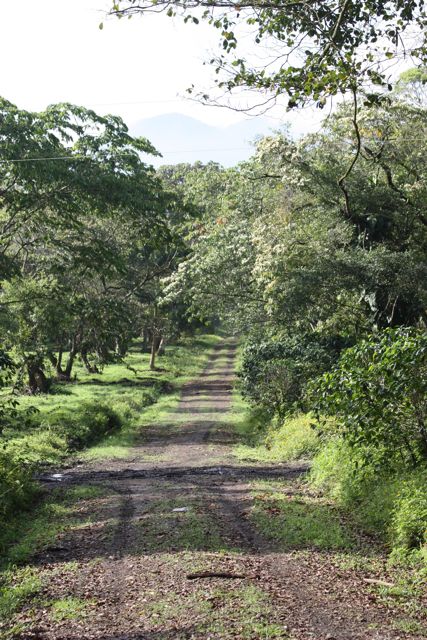

Buy bird-friendly shade-grown coffee. Better yet, go to Honduras and see where it comes from. And tell the black-throated greens you heard it from me.

Colene and Bill McKee share a moment in a paradise for birdwatchers.

Want to find certified bird-friendly coffee for sale near you? Follow this link to the Smithsonian Migratory Bird Center's map of US retailers.

Thursday, April 21, 2011

Shade-Grown Coffee Birds


 So many birds flitted and foraged through the shade-grown coffee plantation it was hard to focus on any one, but this black-throated green warbler got right up in my grille, so he won for awhile. I took so few truly decent bird photos in Honduras, thanks to rain and generally dark conditions, that I reveled in having a cooperative subject in good light. 

 Ironically, I wouldn't have been in this shade coffee plantation had I not been struck by Montezuma's Revenge (probably from brushing my teeth in tap water, duh duh duh). 
Why did I think toothpaste had antibacterial properties? It doesn't. So y'all, when you travel in Latin America, brush your teeth and rinse your toothbrush in bottled water. And take Immodium with you.

At any rate, I was actually happy to stay behind from the field trips at the first MesoAmerican Birding Festival, and potter around (well, that's an unfortunate choice of words) near the hotel.


I was floored by the beauty of this keel-billed toucan with the sun coming through his underdrawers.


 He showed off that acrobatic toucan stuff I love so much. Two other birders staying at Hotel Las Glorias witnessed workers in the shade coffee plantation using slingshots to shoot large rocks at the toucans overhead, which may explain why this bird was scolding me so lustily. I was horrified when I was told that one had succeeded in hitting a toucan in flight, which dropped several feet but kept flying. Their intent? To injure one and bring it to earth, where they could catch it and sell it to a zoo or for a pet. 


What greater abomination could you visit on a bird of the treetops and hot blue sky? Displayed for sale in the gift shop at Hotel Las Glorias were slingshots exactly like those I saw tucked into the knapsacks of its coffee plantation workers. Honduras, as a country, needs to be shown that its birds are worth far, far more on the wing than in filthy cages. If you go, and I hope you do, check that gift shop and ask the proprietors why they have slingshots for sale, if they still do. We did, and our festival participants made a lot of noise about their toucan-shooting employees. We made it clear that's not cool if you want to cater to birdwatchers. Bad form for a host hotel of a birding festival. 


I hope this big beautiful bird still has the sun shining through his wondrous bill.

Another malevolently sweet ferruginous pygmy-owl basked in rare sunshine on a long branch.


I watched and waited, wanting to photograph the back of its head.


Finally I got a profile, but not quite what I was after.


Here's the best I could do. FEPO's, like several other small owls, have marvelous false eye spots on the back of their heads. The "eye" even has a white eyebrow! This is thought to help the little owl when it's being mobbed by other birds--maybe they back off if they think both sides of its head are looking at them. Because the FEPO includes songbirds in its diet, it's not well-liked among the feathered tribe, and being a diurnal hunter, it gets a lot of mobbing grief from its prey. 


That prey might include "our" magnolia warblers, which are common as beans in the shade coffee plantations. Again, I had the distinct feeling I was being petitioned to spread the word about buying and drinking shade-grown coffee. Although I've not drunk coffee since before Phoebe was born (you don't put caffeine in a shrew, do you?), I was blown away by the velvety-smooth, rich taste of shade-grown coffee in Honduras.


Want to find certified bird-friendly coffee for sale near you? Follow this link to the Smithsonian Migratory Bird Center's map of US retailers.

ptpd

http://www.777seo.com/seo.php?username=kewut&format=ptp http://www.paid-to-promote.net/member/signup.php?r=kewut Get Paid To Promote, Get Paid To Popup, Get Paid Display Banner Get Paid To Promote, Get Paid To Popup, Get Paid Display Banner